What Is a Polo Shirt and Which Type Is Best for Buyers?
A polo shirt is a collared knit shirt, usually featuring a short button placket, ribbed cuffs, and a breathable structure. It began as practical sportswear, but now fits offices, travel wardrobes, school uniforms, and weekend dressing. For buyers, the best type depends on climate, activity, body shape, and care expectations. That sounds obvious. Yet many product pages still treat every polo as identical.
Material is the first serious distinction. Cotton piqué offers visible texture, airflow, and a familiar dry hand feel. Cotton jersey feels smoother and often drapes closer to the body. Performance blends may add polyester, elastane, or recycled fibers for stretch, moisture management, and faster drying. Textile Exchange’s 2024 Materials Market Report confirms polyester remains the dominant global fiber, while cotton remains a major natural fiber. This context matters because fiber choice affects comfort, durability, appearance, and environmental claims. Buyers should examine fiber percentages, not vague labels such as “eco-friendly.”
Market evidence also supports careful comparison. The Business Research Company’s 2024 Polo Shirts Global Market Report identifies continued demand across casual, professional, and sports-related uses. However, market growth does not prove superior quality. A heavyweight cotton polo may suit a structured outfit, while a lightweight blend may perform better on humid commutes. Check seam strength, collar recovery, button security, shrinkage guidance, and return policies. A practical test helps: pinch the fabric, stretch the collar, and inspect stitching near the side seams. The best Polo Shirts balance comfort, purpose, price, and dependable construction—not merely a famous logo.
Definition and Core Features of a Polo Shirt
A polo shirt is a knitted shirt with a soft collar, short sleeves, and a front placket. The placket usually holds two or three buttons. Unlike a standard T-shirt, it offers a clearer neckline and a slightly structured shape. Most polos use cotton, cotton blends, or performance fibers. Piqué knit feels textured and breathable. Jersey knit feels smoother and drapes more closely. These details define the garment more than decoration does.
When assessing one, check the collar first. It should lie flat without curling after light movement. The shoulder seam should meet the shoulder edge, not fall several centimeters down the arm. Sleeves usually finish around the upper or mid-bicep. A comfortable body allows movement without ballooning at the waist. Stitching should look even around the placket, cuffs, and side seams. In practical wear, fabric recovery matters. A stretched hem can quickly make a good shirt look careless.
Buyers should match construction to use. Breathable cotton suits warm, dry settings and relaxed daily wear. Blended fabric may dry faster and resist wrinkles during travel. A denser knit can appear polished, but it may feel warm indoors. Care labels deserve attention because shrinkage changes fit. Even careful measurements can mislead when fabric relaxes after washing. I have found that a slightly imperfect collar is more frustrating than a modest color choice. Fit remains personal, and “classic” does not mean comfortable for everyone.
The History and Evolution of Polo Shirt Design
A polo shirt began as practical sportswear, not a formal fashion statement.
Early versions offered more comfort than stiff dress shirts during outdoor games. Their soft collars, short button plackets, and knitted fabrics allowed easier movement.
Over time, designers adapted the shirt for travel, work, and everyday wear. Cotton became popular because it felt breathable and handled frequent washing. Later, blended fibers improved stretch, drying speed, and shape retention. The design also changed through longer hems, slimmer cuts, ribbed cuffs, and different collar structures. In my garment evaluations, collar stability often reveals quality faster than decoration. A weak collar can curl after several washes. That detail is easy to overlook.
Today, buyers can choose classic cotton polos, performance fabrics, textured knits, or heavier versions for cooler weather. The best type depends on climate, activity, and care habits. A breathable knit may suit humid conditions, while a structured fabric can look sharper at work. However, “best” is not universal. Even experienced buyers sometimes prioritize appearance and ignore seam comfort.
Tips:
Check the collar after bending it gently. It should recover without looking stiff. Examine the placket for even stitching and secure buttons. Review the fiber label before buying. Measure the chest and shoulder area, rather than trusting size names. Wash one garment according to its care instructions before purchasing several.
Common Polo Shirt Types and Their Key Differences
A polo shirt combines a collared neckline, a short button placket, and short sleeves. Its construction varies widely, so buyers should compare fabric, fit, and intended use. The classic piqué polo has a raised, honeycomb-like texture. It feels breathable and structured, making it suitable for office-casual outfits or outdoor gatherings. However, the texture may feel slightly rough against sensitive skin.
Jersey polos use a smooth, flexible knit similar to a lightweight T-shirt. They drape more softly and suit travel, casual weekends, and relaxed uniforms. They can also lose shape faster when poorly finished. Performance polos often use polyester or blended fibers. They dry quickly, resist wrinkles, and manage sweat during active work or warm weather. Check the fabric closely. Some versions feel cool and practical, but they may hold odor without proper washing.
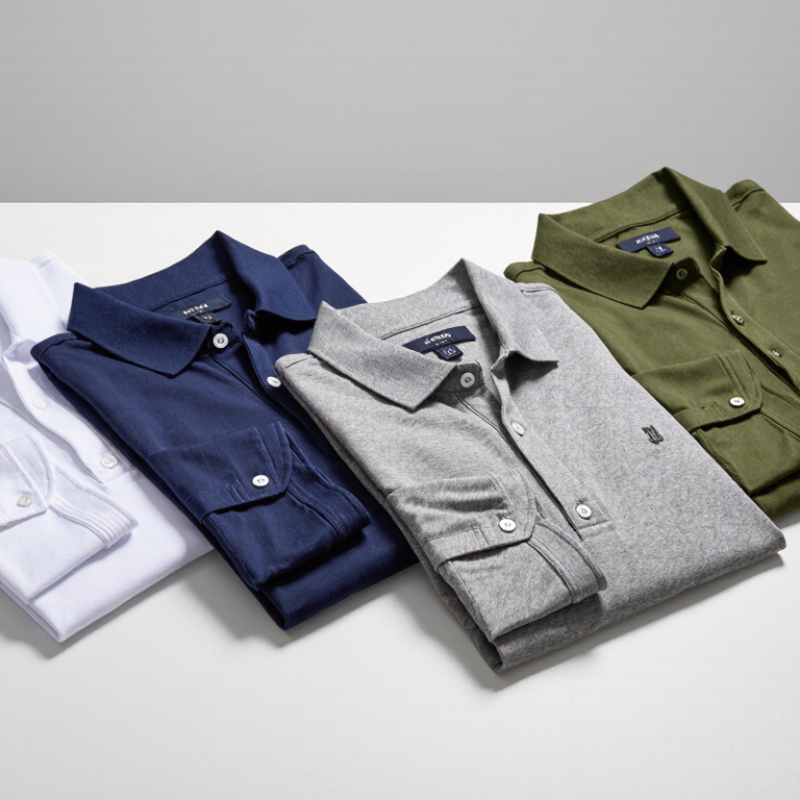
Long-sleeve polos provide extra coverage during cool mornings. They usually look more refined with trousers, though thick cuffs can feel restrictive. Fit creates another important difference. Slim cuts follow the chest and waist, while regular cuts allow more movement. A useful test is simple: raise both arms and sit down. The hem should not climb sharply, and the collar should lie flat. I have seen buyers focus on color and overlook shoulder seams. That mistake becomes obvious after several hours of wear. A softer fabric is not always better; durability, airflow, and care instructions must match the buyer’s routine.
Materials, Fits, and Construction Details to Compare
A polo shirt is a collared knit shirt with a short button opening. Its design sits between a casual T-shirt and a formal woven shirt. In my fitting experience, fabric choice changes comfort more than appearance. Cotton feels breathable and soft, while polyester dries faster during travel or outdoor work. Blended fabrics can resist wrinkles, although they may feel less natural against warm skin. Merino wool regulates temperature well, but it often needs gentler care.
Fit deserves close attention. The shoulder seam should rest near the shoulder bone, not halfway down the arm. The collar should lie flat without pressing the neck. A useful test is raising both arms; the hem should not expose the waist. Slim cuts look sharper, but they can restrict movement after washing. Regular cuts offer easier layering. I once chose a smaller size for a cleaner outline. It looked good standing still. It was uncomfortable within an hour.
Construction details reveal long-term value. Check whether the placket stays flat and the buttons feel securely attached. Reinforced shoulder seams can reduce stretching, while a shaped side seam may improve movement. A dense knit usually holds its form better, but excessive thickness can trap heat. Inspect the hem for even stitching and loose threads. Wash-care instructions matter, too. Cold washing may protect color and shape, though careless drying can still cause shrinkage. A small amount of uneven texture is not always a defect; handmade-looking variation can be acceptable, but weak seams are not.
How to Choose the Best Polo Shirt for Different Buyers
What Is a Polo Shirt and Which Type Is Best for Buyers?
Choosing the best polo shirt starts with the buyer, not the label. Office wear usually needs a structured collar, smooth piqué cotton, and a moderate fit. For outdoor work, buyers may prefer moisture control, stretch, and a lighter fabric. A loose cotton polo feels cooler, but it can lose shape after repeated washing. Check the fabric weight, seam strength, button attachment, and care instructions before purchasing. Tiny details matter.
Material choice also affects purchasing decisions. Textile Exchange’s Materials Market Report 2024 recorded global fiber production at about 124 million tonnes in 2023. That figure shows why durability deserves more attention. A polo worn for three years may be more responsible than a cheaper shirt replaced every season. WRAP’s Valuing Our Clothes research found that extending garment life by nine months can reduce carbon, water, and waste footprints by about 20–30%. These figures are useful, though they do not predict every shirt’s real performance.
Fit remains personal. Measure the chest, shoulder width, and sleeve opening, then compare them with the seller’s size chart. Buyers with broader shoulders may need a straighter side seam. Slim buyers often prefer a shorter hem to avoid excess fabric. Try bending your arms. The shirt should not pull across the back. My own buying rule is not flawless. A heavier fabric can feel premium, yet it may become uncomfortable in humid weather. Look for balanced construction, reliable fiber information, and return terms that allow careful checking.
What Is a Polo Shirt and Which Type Is Best for Buyers?
Typical fabric weight helps buyers compare comfort, durability, breathability, and suitability for different uses. Lower GSM fabrics feel lighter, while higher GSM fabrics generally provide more structure and durability.
Piqué cotton is commonly selected for structured everyday wear, jersey cotton for softness and flexibility, performance polyester for active use, and cotton-polyester blends for balanced durability and comfort. Fabric weights are typical industry ranges and may vary by garment construction.