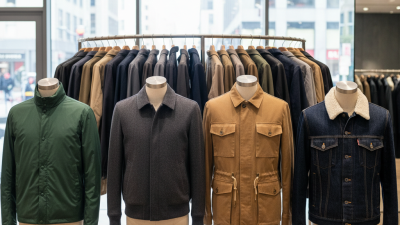
Sourcing Mens Jackets globally in 2026 requires more than comparing factory prices. Buyers must examine fabric performance, construction quality, production capacity, and supplier reliability. A jacket may look impressive under showroom lighting, yet fail after repeated washing or long-distance transport. Small details matter: smooth zipper movement, even sleeve seams, secure buttons, and a lining that does not twist.
Giorgio Armani once said, “The difference between style and fashion is quality.” His words offer a practical sourcing standard. Strong suppliers should provide clear fiber compositions, production samples, quality-control records, and realistic delivery schedules. Factory visits, independent inspections, and documented sustainability claims can reduce uncertainty. Still, no sourcing map is perfect.
Markets change quickly.
Freight costs can rise unexpectedly. A trusted factory may also struggle during peak seasons. Buyers should therefore compare suppliers across regions instead of depending on one familiar partner. Vietnam may offer strong outerwear production, while Turkey can provide shorter delivery routes to Europe. China remains competitive for material variety and manufacturing scale. Each option needs direct verification.
Experienced buyers should record sample measurements, defect rates, packaging conditions, and communication response times. These notes create evidence for better decisions. They also expose uncomfortable weaknesses. A low quote may hide expensive rework. A fast sample may not reflect stable bulk production. Responsible sourcing means asking difficult questions before placing large orders. In 2026, the best Mens Jackets strategy will balance cost, quality, traceability, resilience, and honest supplier relationships.
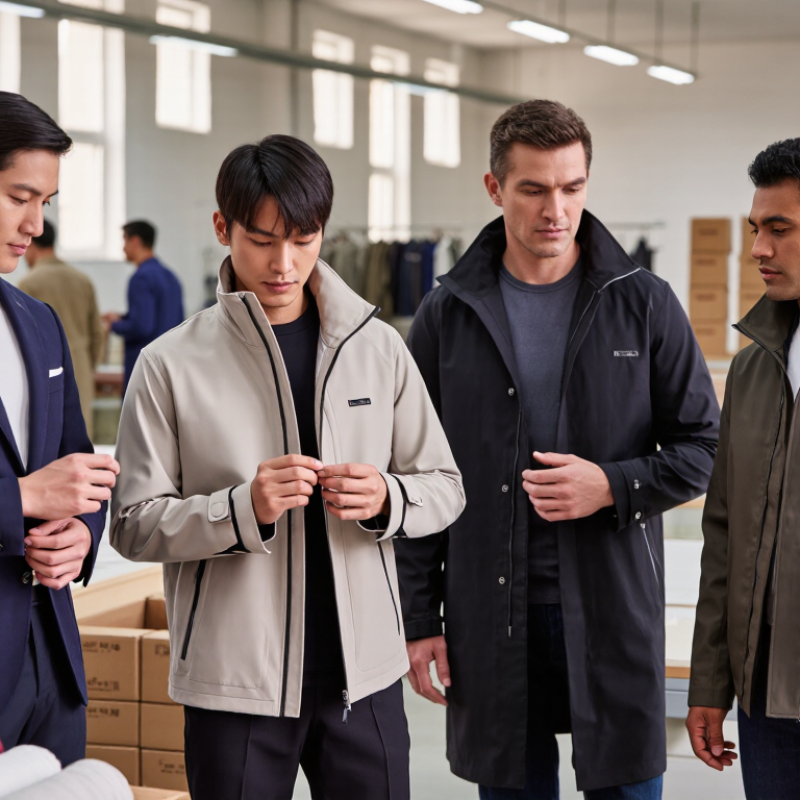
How to Source Men’s Jackets Globally in 2026?
McKinsey projects 2–4% fashion growth for 2025, making disciplined sourcing more important than chasing volume. This modest outlook suggests cautious buying, sharper product briefs, and flexible supplier planning. For men’s jackets, define the customer, climate, price range, fit, and delivery window before contacting factories. A clear brief reduces sampling errors and prevents attractive but unsuitable offers.
Request fabric composition, weight, test reports, production capacity, and recent export experience. Compare suppliers across at least three regions, then assess lead times, communication, quality controls, and payment terms. I have found that a low quote often hides higher inspection costs or slower revisions. That assumption can still be wrong. Markets change quickly. Keep a backup supplier and approve a sealed reference sample before bulk production. Verify workplace standards and import documentation through qualified professionals.
Tips: Start with a small trial order. Test zippers, seams, lining, and color stability after washing. Record every defect with photographs and measurements. Ask suppliers how they handle late fabric arrivals, rejected goods, and sudden demand changes. Do not rely on promises alone. Written specifications matter. A practical 2026 strategy may combine stable core jackets with limited seasonal experiments, allowing buyers to respond to the projected growth without overstocking.
The 2025 global fashion growth outlook is projected within a 2–4% range. For a 2026 men’s jacket sourcing brief, use the low-growth scenario for conservative volume planning, the midpoint for the base plan, and the high-growth scenario when testing additional capacity and inventory commitments.
Source: McKinsey & Company, The State of Fashion 2025; projected global fashion growth range of 2–4%.
Global menswear sourcing in 2026 should begin with a map, not a supplier directory. WTO trade data can show where men's jackets are exported in meaningful volumes. Review product categories, export values, unit trends, and partner markets. Compare several years, not one unusual season. A sudden increase may reflect re-exports, currency shifts, or temporary demand. The numbers narrow the search. They do not prove factory capability.
Next, layer World Bank logistics scores over the trade map. Examine customs efficiency, transport infrastructure, shipment tracking, and delivery reliability. A region with strong exports but weak logistics may create longer lead times and higher buffer costs. A smaller exporting region with dependable ports can be easier to manage. Use the score as a screening tool, then verify inland transport, warehouse access, and seasonal congestion. Ask suppliers for recent shipment records.
Practical validation should happen before a large order. Request production photos, material specifications, capacity details, and a sample jacket. Check measurements after washing and inspect zippers, seams, lining, and packing. I would also compare quoted lead times with actual dispatch history. Suppliers sometimes present ideal schedules. That is a warning, not a verdict. Trade statistics can be incomplete, and logistics scores are national averages. Local factory visits, independent audits, and small pilot orders reveal the gaps that datasets miss.
| Sourcing Region | Representative Markets | WTO Product Scope | WTO Trade-Data Fields to Compare | World Bank LPI 2023 Score |
Logistics Signal | Best Use in a 2026 Sourcing Portfolio |
|---|---|---|---|---|---|---|
| East Asia | China | HS 6203; especially 6203.32, 6203.33 and 6203.39 for men's and boys' woven jackets by fibre type. | Reporter exports, partner imports, export value, quantity, unit value and annual growth. | 3.7 | Strong international logistics capability; suitable for diversified material and production programs. | Broad supplier discovery, material variety, complex construction and scalable production. |
| Southeast Asia | Vietnam | HS 6203.32, 6203.33 and 6203.39; filter by destination market and fibre composition. | Three-year export trend, partner concentration, average export unit value and destination diversification. | 3.3 | Solid regional logistics performance with established ocean-freight connections. | Core option for repeat programs, export-oriented manufacturing and balanced cost-to-service requirements. |
| Southeast Asia | Indonesia | HS 6203.32 and 6203.33 for cotton and synthetic-fibre outerwear categories. | Export value by partner, shipment quantity, unit value and year-on-year change. | 3.0 | Adequate logistics capability; island geography can make inland and inter-island planning important. | Supplier diversification and medium-to-large production runs where lead-time buffers are available. |
| Southeast Asia | Cambodia | HS 6203, with emphasis on cotton and man-made-fibre jacket lines. | Destination-market growth, export value, quantity, unit value and partner dependence. | 2.4 | Lower logistics score; allow additional time for inland transport, consolidation and border processes. | Cost-focused basics and capacity diversification, subject to tighter logistics planning. |
| South Asia | India | HS 6203.31, 6203.32, 6203.33 and 6203.39, selected by fibre and garment construction. | Product-level export value, quantity, unit value, destination mix and supplier-country trend. | 3.4 | Moderate-to-good logistics capability with significant variation by corridor and inland location. | Material flexibility, smaller development runs and programs requiring textile or finishing expertise. |
| South Asia | Bangladesh | HS 6203.32 and 6203.33 for cotton and synthetic-fibre woven jackets. | Export growth, destination concentration, quantity, average unit value and seasonal performance. | 2.6 | Lower logistics score; port congestion, inland movement and buffer stock should be assessed. | Large-volume commercial programs with clear booking schedules and controlled product complexity. |
| South Asia | Pakistan | HS 6203.32 and 6203.33, with additional review of cotton-based product lines. | Partner-market growth, export unit value, quantity, product subheading and trade concentration. | 2.4 | Lower logistics score; schedule reliability and route availability require careful validation. | Alternative South Asian capacity for price-sensitive programs with longer planning horizons. |
| Europe and Türkiye | Türkiye | HS 6203.31, 6203.32, 6203.33 and 6203.39 for nearby-market sourcing. | Short-haul partner exports, unit value, product mix, destination growth and delivery-market proximity. | 3.4 | Moderate-to-good logistics performance and strong geographic access to Europe and nearby markets. | Shorter lead-time capsules, replenishment, fashion-sensitive orders and lower inventory exposure. |
| Central Europe | Poland | HS 6203; compare intra-European trade flows and re-export patterns. | Intra-European export value, partner-country growth, unit value and road/rail-oriented delivery routes. | 3.6 | Good logistics performance and strong access to European distribution corridors. | Near-market production, rapid replenishment and programs where delivery responsiveness matters. |
| Western Europe | Italy and Germany | HS 6203.31–6203.39; separate manufacturing exports from distribution and re-export activity. | Reporter-partner flows, unit value, product subheading, re-export indicators and market proximity. | 3.7 / 4.1 | High logistics performance; efficient for complex coordination and regional distribution. | Premium construction, technical development, small batches and time-critical European supply. |
| North Africa | Morocco | HS 6203, with emphasis on European destination markets and short-sea or land-linked routes. | European partner growth, export unit value, quantity, product mix and seasonal delivery patterns. | 2.5 | Lower overall LPI score; proximity to Europe can partly offset the need for operational controls. | Nearshore replenishment and flexible European programs with strict logistics monitoring. |
Global sourcing for men’s jackets in 2026 should begin with landed-cost evidence, not factory quotations.
The WTO reported 2.7% merchandise-trade growth in 2024, but that figure measures trade volume, not your profit. Freight rates, currency changes, tariffs, and delivery delays can erase that growth quickly.
Build a cost sheet for each origin and product specification. Include fabric, sewing, labels, inspection, inland transport, insurance, ocean or air freight, duties, customs fees, warehousing, and expected returns.
A jacket quoted at 28 dollars may reach 41 dollars after delivery. Another quoted at 31 dollars may land at 38 dollars because its route is shorter.
Check the correct customs classification and current duty rules with a qualified broker.
Use real samples, not optimistic estimates. Ask suppliers for carton dimensions, gross weight, production capacity, and recent lead-time records. Order a small trial shipment before committing to a seasonal volume.
My first spreadsheet ignored storage and return handling. The result was uncomfortable.
Compare landed costs with your target selling price and the 2.7% trade-growth context. Growth may support demand, but it does not guarantee purchasing power in every market.
Test two freight options, record inspection failures, and update currency assumptions monthly.
A cheaper origin can become expensive when delays create stockouts. Rates also move. Recheck them before signing.
Sourcing men's jackets in 2026 requires more than comparing unit prices. The ILO's widely cited estimate of 60 million garment workers shows the sector's scale. It does not prove that every factory has usable capacity. I would verify production lines, skilled operators, machine counts, and monthly output before sampling. Ask for three months of records, not optimistic forecasts. A factory may promise 20,000 jackets, yet deliver only 12,000 during peak season.
Tips:
A practical audit should compare planned orders with realistic utilization, perhaps 70–80%, leaving room for repairs and absences. Separate jacket capacity by construction. Padded styles, taped seams, and heavy wool need different equipment. Photograph dated production boards, then recheck them before purchase orders.
My own caution: capacity audits can miss subcontracting or seasonal labor changes. Treat every report as evidence, not certainty. Build a small trial order and measure defects, delivery variance, and communication speed. Good sourcing is not perfect prediction. It is disciplined verification.
How to Source Mens Jackets Globally in 2026?
Textile Exchange’s 2024 Global Fiber Market Data gives sourcing teams a useful market baseline. Global fiber production reached about 124 million metric tonnes in 2023. Polyester remained the dominant fiber, while cotton held a smaller share. These figures matter when comparing jacket suppliers across countries. A material’s popularity does not prove its sustainability.
Use the report to question supplier claims, not replace factory verification. Ask each mill for fiber composition records, production dates, and transaction certificates. For recycled content, check whether the claim covers the entire fabric or only selected yarns. Request laboratory testing for blended jackets. Small details matter, such as lining content, pocket bags, thread, and insulation.
A jacket can look responsible and still contain unverified materials. I have seen sourcing teams focus on the shell fabric while overlooking trims. That is an easy mistake. Keep the report beside supplier documents during sampling. Compare declared fiber percentages with test results and purchase records. Textile Exchange data describes the market, but it cannot certify one specific roll of fabric. Supplier transparency may also differ between regions. Some documents arrive late or use unclear terminology. Treat that uncertainty as a signal for further review, not as proof of wrongdoing. Procurement decisions in 2026 should balance material evidence, factory experience, and repeatable verification procedures.