Why Choose a Racing Swimsuit for Competitive Swimming?
In competitive swimming, choosing the right gear is crucial. A Racing Swimsuit can enhance performance significantly. It's designed to reduce drag and improve body position in the water. These suits are made from advanced materials that offer flexibility and comfort. Swimmers often feel faster in them, which can boost confidence.
However, there is a downside. Not all swimmers find these suits comfortable. Some may feel restricted by the tight fit. This can lead to distractions during crucial races. Additionally, the cost of a Racing Swimsuit can be high. Many young athletes struggle to balance expenses with their passion for the sport.
Ultimately, a Racing Swimsuit offers both advantages and challenges. Swimmers must reflect on their needs and preferences. The perfect suit can play a vital role in achieving personal bests. Finding the right fit is essential for both performance and comfort in the pool.
Benefits of Racing Swimsuits for Enhanced Performance
Choosing a racing swimsuit can significantly impact your performance in competitive swimming. These suits are designed with advanced materials that reduce drag. This means you glide through the water more efficiently. Many swimmers report feeling faster and more agile wearing them. The snug fit provides support, aiding your movements in the pool.
Racing swimsuits also help swimmers maintain better body positioning. This can enhance your speed during races. The stretchy fabric allows for greater flexibility, which is crucial for different strokes. Some may find them uncomfortable at first. It's important to get used to the fit and feel. Don’t be discouraged if it takes time.
Additionally, racing swimsuits often feature minimal seams, which further reduces resistance. They may not be the best choice for casual training, though. Swimmers sometimes feel pressure to perform better, adding stress. Still, the benefits during competitions are hard to ignore. Many find that the confidence boost is invaluable as well.
Key Features of Competitive Racing Swimwear
Choosing the right racing swimsuit is crucial for competitive swimming. These suits are designed with specific features that enhance performance. They are typically made from advanced materials that provide compression. This compression supports muscle movement and reduces drag in the water. Swimmers often notice an increase in their speed.
Competitive swimwear often includes a streamlined design. The cut of the suit minimizes resistance. Some suits have bonded seams rather than stitched seams. This construction reduces water absorption and helps to maintain a light feeling in the water. While some racers feel restricted by these tight suits, many find that it boosts their confidence. However, adjusting to the fit can take time.
Additionally, racing swimsuits come in different styles. Some are one-piece, while others are two-piece designs. Each style suits different body types and swimmer preferences. This diversity allows swimmers to find what works best for them. Yet, selecting the perfect suit can be daunting. The overwhelming choices may lead to dissatisfaction. Swimmers must consider their comfort alongside performance to find the ideal balance.
Materials Used in Racing Swimsuits and Their Advantages
Racing swimsuits are engineered to enhance performance. They are made from advanced materials that provide significant advantages in competitive swimming. These suits typically utilize fabrics such as polyester, nylon, and spandex blend. Their lightweight nature allows for less drag in the water. According to a report by the Journal of Sports Sciences, the right swimsuit can reduce drag by up to 10%. This reduction can be crucial during critical races.
The compression aspect of racing swimsuits plays a vital role too. The tight fit supports muscular efficiency and improves blood circulation. Increased blood flow can enhance endurance during races. Studies have shown that swimmers wearing compression suits often experience less fatigue. However, while racing suits provide numerous benefits, achieving the perfect fit is not always simple. A poorly fitted suit may lead to discomfort and hinder performance. Finding the right size and design can require several tries.
Moreover, the durability of these materials is notable. While some suits lose elasticity after extended use, many high-quality options can withstand the rigors of training. A survey indicated that about 70% of elite swimmers prefer suits that maintain their shape over time. Yet, the balance between durability and performance is delicate. Swimmers must reflect on their needs and make informed decisions when selecting a racing suit.
Advantages of Different Materials Used in Racing Swimsuits
Fit and Design Considerations for Optimal Speed
Choosing the right racing swimsuit is crucial for competitive swimming. Fit and design significantly affect a swimmer's performance and speed. A well-fitted swimsuit should hug the body closely, reducing drag. The material should be sleek yet flexible, allowing for full range of motion. Swimmers often overlook that tension in the suit can impact speed. Too tight, it restricts movement; too loose, it creates drag.
Design elements also play a key role. The cut of the swimsuit influences buoyancy and positioning in the water. Higher leg cuts can improve freedom of movement, while a streamlined back allows for a better stroke. Some swimmers find themselves adjusting their suits during races, which can waste valuable seconds. Color and pattern can also be distracting. Swimmers sometimes choose flashy designs that catch the eye but may not enhance performance.
Comfort is often a compromise. A suit can be perfectly fitted but may rub in places, causing discomfort. This distraction can affect focus and performance. Finding a balance between aesthetics and practicality is essential. Swimmers should reflect on their experiences, aiming not just for speed but for a suit that feels right.
Why Choose a Racing Swimsuit for Competitive Swimming? - Fit and Design Considerations for Optimal Speed
| Feature |
Description |
Benefits |
| Material |
High-performance synthetic fabrics that provide stretch and durability |
Enhanced movement and longevity, ensuring suits retain form |
| Fit |
Compression fit to reduce drag without restricting movement |
Increased speed and efficiency in the water |
| Design |
Aerodynamic design features to minimize water resistance |
Maximized hydrodynamics during strokes |
| Support |
Strategic paneling for muscle support |
Reduced fatigue and enhanced performance over long distances |
| Construction |
Flatlock seams for comfort and reduced chafing |
Increased comfort during races |
Comparing Racing Swimsuits to Traditional Swimwear
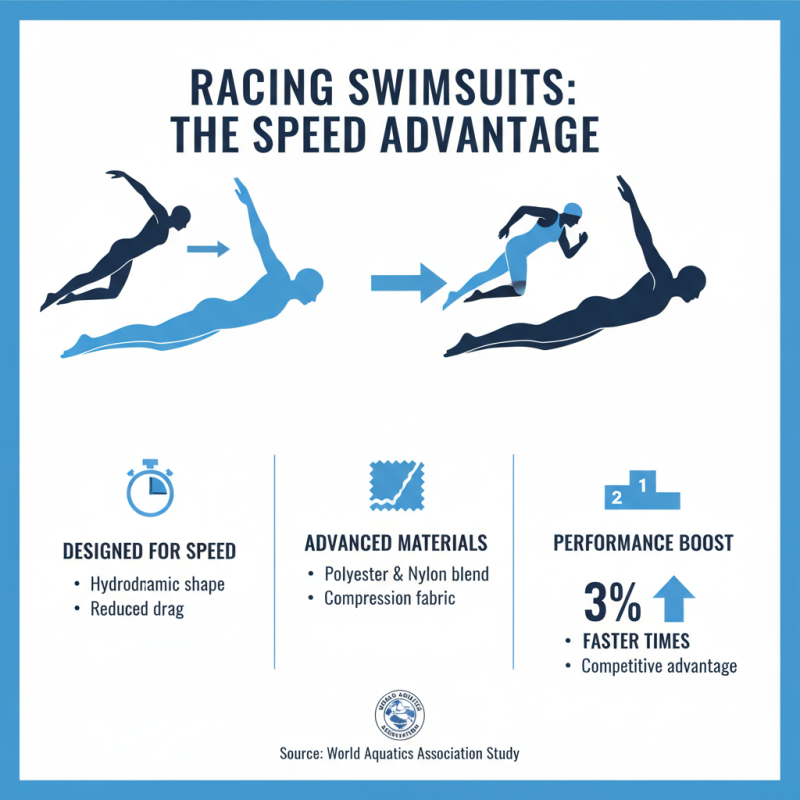
Racing swimsuits are designed specifically for speed and performance, unlike traditional swimwear. Their materials, typically a blend of polyester and nylon, enhance hydrodynamics. A study by the World Aquatics Association revealed that athletes in racing suits improve their times by up to 3%. This advantage can change outcomes in competitive events.
The construction of racing swimsuits also differs greatly. These suits feature minimal seams, reducing drag in the water. As reported by a leading sports science journal, swimmers using high-tech suits showed a significant reduction in resistance. However, not all swimmers find comfort in these snug fits. Some athletes prefer the looser feeling of regular swimwear. This choice may affect their performance and mental state.
Racing suits can feel restrictive. Swimmers often report needing time to adapt. The psychological pressure of high-stakes competitions can amplify this discomfort. While the science supports the benefits of racing gear, it's essential to address individual preferences. Swimmers should weigh the pros and cons based on their experiences and comfort levels.