China’s personalized apparel sector has moved beyond simple logo printing. Today, buyers expect sharp graphics, flexible quantities, reliable fabrics, and predictable delivery. Grand View Research estimates that the global custom T-shirt printing market reached approximately USD 4.3 billion in 2023. It also projects strong growth through 2030. McKinsey reports that 71% of consumers expect personalized interactions, while 76% feel frustrated when brands provide irrelevant experiences. These figures explain the growing demand for Personalized T Shirts across fashion, events, creator brands, and corporate campaigns.
However, supplier selection requires more than attractive product photos. This guide examines China’s top ten Personalized T Shirts suppliers through practical criteria. These include printing technology, fabric consistency, minimum order quantities, sampling speed, production capacity, export experience, and quality control. Supplier certifications and transparent communication also matter. Marketing strategist Tom Fishburne says, “The best marketing doesn’t feel like marketing.” That idea fits custom apparel well. A shirt should feel personal, not mass-produced.
The ranking is not flawless. Data can change quickly. Supplier performance may also vary by season, order size, and artwork complexity. Therefore, buyers should request current samples, fabric specifications, wash-test results, and written production terms. Small details matter. A faded neckline can damage an entire campaign. This overview offers a practical starting point, not a substitute for direct verification.
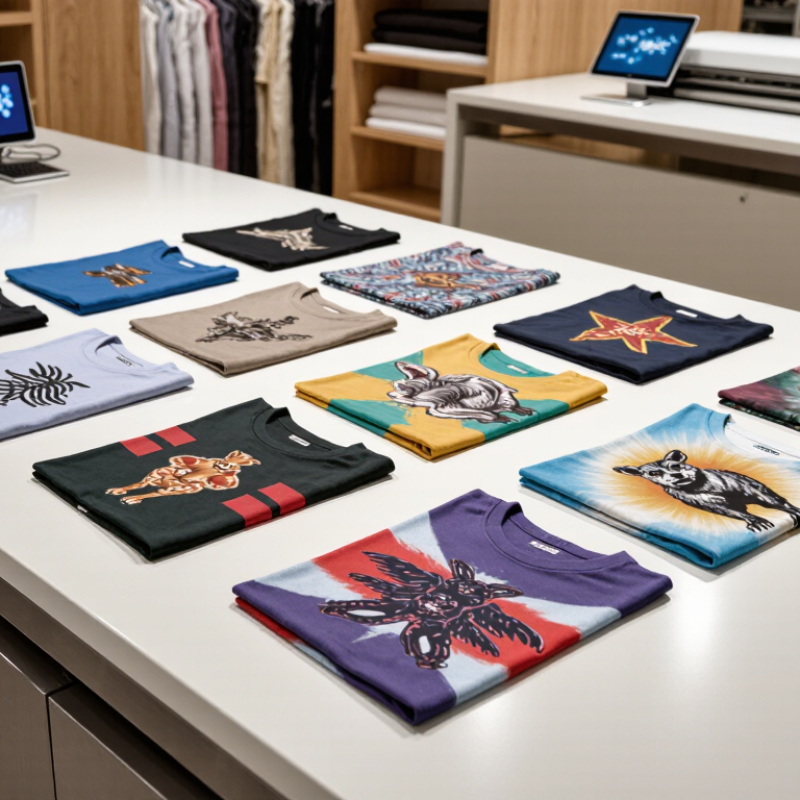
China’s custom T-shirt sector remained highly active in 2024. Demand shifted from large uniform orders toward smaller, personalized batches. Many buyers wanted 50 to 500 pieces, faster sampling, and flexible artwork changes. Online sellers also tested new designs with limited quantities.
The strongest suppliers usually covered ten practical needs: cotton basics, sports shirts, oversized fits, children’s wear, workwear, embroidered styles, printed fashion, eco-fabric options, private-label packaging, and rapid sample production. Production quality still depended on measurable details. A reliable factory should show fabric weight, shrinkage results, colorfastness records, and clear size charts. For everyday shirts, buyers often compared 180 to 240 GSM cotton samples.
Digital printing supported detailed graphics and short runs. Embroidery remained popular for uniforms and premium merchandise. Recycled polyester and organic cotton attracted attention, but certification claims required careful verification. A certificate photo is not enough. Ask for current documentation and matching shipment records.
From practical sourcing experience, sample approval often reveals more than a polished catalog. Check collar recovery, seam tension, print edges, and washing performance. Delivery data also matters, especially during seasonal demand peaks. Market figures can look precise, yet reporting methods differ across factories and platforms. I would treat broad growth claims cautiously. Some suppliers still understate lead times, while buyers sometimes change artwork too late. That gap creates avoidable costs.
Ranking the top ten suppliers requires more than comparing online catalogs. A practical review should measure MOQ, lead time, production capacity, certifications, and buyer ratings. MOQ reveals whether a supplier serves small tests or large retail orders. Lead time must include artwork approval, sampling, production, and shipping preparation. A fast quote means little if the factory misses the dispatch date.
Capacity should be checked through monthly output, equipment, staffing, and quality-control records. Certifications can support reliability, but buyers should verify their scope, issuing body, and current validity. Buyer ratings add useful experience, especially comments about print durability, sizing accuracy, packaging, and communication. However, ratings may be incomplete or influenced by one unusual order. No ranking is perfect.
Tips: Request a physical sample before placing a larger order. Wash it several times and inspect fading, seams, fabric weight, and print cracking. Ask for a written production schedule, not only a promised delivery date. Compare the stated MOQ with your actual sales forecast. A lower MOQ may cost more per piece, while high capacity may not guarantee careful finishing. Keep records of approvals and revisions. That small step prevents expensive misunderstandings.
China’s top 10 personalized T-shirt suppliers differ in production focus, quality control, and export experience. A practical supplier profile should explain screen printing, direct-to-film printing, direct-to-garment printing, embroidery, and sublimation. Each method suits different artwork, order sizes, and fabric types.
Cotton remains popular for soft everyday shirts, while polyester performs better for sportswear and bright sublimation designs. Cotton-polyester blends can reduce shrinkage, but the hand feel may be less natural.
Pricing usually depends on fabric weight, printing area, color count, sizing, packaging, and order volume. Basic printed shirts may cost less at higher quantities, while small custom batches often carry higher unit prices. Exact quotes need current specifications.
Export markets also matter. Experienced suppliers commonly serve buyers in North America, Europe, Australia, and Southeast Asia. Their profiles should mention sample approval, inspection procedures, shipping terms, and production lead times. A polished website is not enough evidence. Ask for recent samples, wash-test results, fabric composition records, and clear payment documents. Mistakes happen, even with experienced factories.
Tips: Request one printed sample before bulk production. Compare colors under daylight. Check collar recovery after washing. Confirm whether quoted prices include packaging and export shipping. Avoid choosing the cheapest offer automatically; it may hide weaker fabric, inconsistent sizing, or limited after-sales support. I would also keep written approval records, because memory becomes unreliable during revisions.
A technical comparison should start with fabric weight. GSM affects hand feel, opacity, durability, and print performance. Common personalized T-shirts range from 160 to 220 GSM. ASTM D3776 and ISO 3801 provide recognized methods for measuring fabric mass. A supplier reporting only “heavyweight” is not giving enough evidence. Ask for the tested GSM and an allowed tolerance, such as ±5%.
Colorfastness also matters. AATCC TM61 uses accelerated laundering, while ISO 105-C06 supports international testing. For many commercial garments, a grade of 4 or above is a practical target. Dark pigments may still fade faster. I have seen attractive samples lose clarity after repeated washing.
Shrinkage should be checked after laundering, not estimated by touch. AATCC 135 measures dimensional change after home laundering. Many buyers request under 3% shrinkage, but the acceptable limit depends on fabric structure and finishing. A supplier should provide length and width results separately.
Defect control needs equal attention. AQL 2.5 is widely used for sampling inspections, but it is not the factory’s true defect percentage. Ask for inline inspection records, needle-line defects, print misalignment, and rejected-piece data. A low reported rate can hide weak sampling.
Tips: Request three production samples, not one showroom sample. Wash them twice. Measure GSM, chest width, print position, and color change. Keep the test conditions written down. My own preference is simple: trust repeatable data, but question perfect numbers.
What Are China’s Top 10 Personalized T-Shirt Suppliers?
Supplier Due Diligence: OEKO-TEX, BSCI, ISO 9001, and Factory Audit Data
A supplier list is only a starting point. For personalized T-shirts, verify the actual factory, not only the trading office. Request the OEKO-TEX certificate number, product scope, expiry date, and tested fabric composition. STANDARD 100 testing covers harmful substances, but it does not confirm every production process. A certificate can be real and still be incomplete.
ISO’s Survey 2023 recorded more than 1.26 million valid ISO 9001 certificates worldwide. This shows broad adoption of quality systems, not guaranteed print quality. Ask for records covering fabric inspection, color tolerance, shrinkage, and final packing. During an audit, inspect rejected shirts beside approved samples. Small details matter. A two-centimeter print shift can damage a retail order.
BSCI evidence should be reviewed carefully because it reflects social compliance assessment, not product certification. Check the audit date, facility address, worker interview method, corrective-action history, and follow-up status. ILO Better Work reports consistently show that worker interviews can reveal problems missed by paperwork reviews. That is why an independent factory audit remains useful. Ask for production-line photos with visible dates, but treat photos as supporting evidence. I still recheck them. Supply-chain documents can age quickly, especially after subcontracting, staff changes, or a new printing line. A practical shortlist should compare certificate validity, audit findings, production capacity, and corrective-action speed.