In 2026, the Sofe Shell Jacket is becoming more than a simple outdoor layer. It must manage wind, light rain, body heat, and daily movement without feeling stiff. Hikers may prefer breathable stretch jackets for steep trails. Commuters often need cleaner cuts, quieter fabrics, and secure pockets. Climbers may choose abrasion-resistant designs with helmet-compatible hoods. Each type answers a different problem.
Yvon Chouinard, Patagonia’s founder and a respected outdoor-industry pioneer, said, “The more you know, the less you need.” That idea remains useful when comparing the 2026 top soft shell jacket types. A heavily insulated model may feel comfortable at a cold campsite. It can become too warm during a fast uphill climb. A thin, highly breathable jacket may perform beautifully on a ridge. It may disappoint during a wet, exposed afternoon.
This guide examines the leading designs through fabric structure, weather protection, mobility, warmth, and practical durability. It considers real details, such as a zipper that works with gloves, cuffs that stop wind, and pockets that remain usable beneath a backpack hip belt. Small features matter.
The market is not perfect. Marketing terms can sound clearer than performance. “Water-resistant” does not mean waterproof. “Breathable” also depends on pace, humidity, and layering. This comparison keeps those limitations visible while identifying the most useful choices for hiking, climbing, travel, work, and everyday wear. The best jacket is rarely the most expensive one. It is the one that fits the weather, the activity, and the person wearing it.
What Are the 2026 Top Soft Shell Jacket Types?
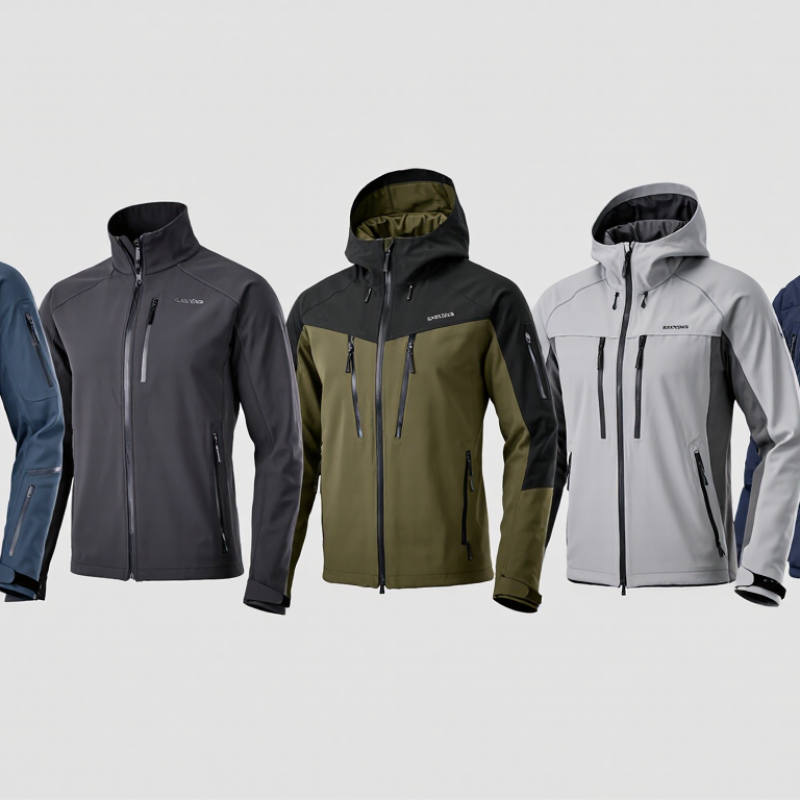
Soft shell jackets now serve distinct needs, from fast hiking to daily commuting. Lightweight active shells prioritize stretch and airflow during constant movement. Midweight trekking shells add stronger face fabrics and better wind resistance. Insulated hybrid shells protect the torso while keeping the arms flexible.
Stretch is not a minor comfort feature. A jacket should move with raised arms, bent elbows, and a loaded backpack. Too much stretch can reduce structure and durability. That trade-off deserves attention. Breathability depends on fabric construction, body heat, garment fit, and ventilation openings. A highly breathable fabric can still feel clammy under a tight pack. Look for moisture vapor data when available, but treat laboratory figures carefully.
ISO 811 evaluates resistance to water penetration through hydrostatic pressure testing. Water pressure increases against the fabric until penetration appears. A higher result generally indicates stronger water resistance. It does not prove complete rain protection. Seams, zippers, cuffs, and repeated abrasion can create weak points. This distinction is often missed. A practical test includes checking the jacket after several washes and wearing it under realistic movement. A fabric may pass controlled testing yet disappoint during prolonged rain. Soft shells work best in changing conditions, where wind protection, mobility, and moderate moisture resistance matter together.
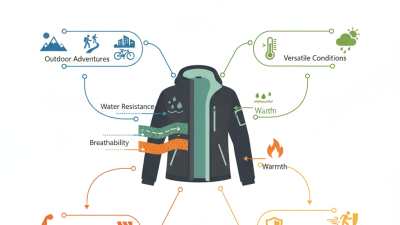
Three-layer soft shells are strong contenders among the top jacket types for 2026. Their construction usually combines a durable outer fabric, a waterproof membrane, and a moisture-moving inner layer. The membrane blocks wind-driven rain while helping sweat escape. Not perfectly, though. Moisture can still build inside during steep climbs.
EN 343:2019 provides a reliable performance reference for wet-weather workwear. A garment carrying Class 3 protection has achieved a high water-penetration rating under laboratory testing. Its breathability rating also matters, because waterproof protection without vapor release feels clammy. Buyers should inspect the full garment certificate, not only the fabric specification. Taped seams, covered zippers, adjustable cuffs, and a shaped hood often decide real comfort. Small details matter.
The European Environment Agency’s European Climate Risk Assessment 2024 identifies intense precipitation as a growing risk across many European regions. That makes dependable rain protection more practical, not merely technical. Textile Exchange’s Materials Market Report 2024 recorded global fiber production at 124 million tonnes in 2023, with continued growth expected. Longer-lasting jackets could reduce replacement pressure, although durability claims need evidence. In practical wear trials, a three-layer shell should be tested with a backpack, bent elbows, and repeated hood adjustments. A wet cuff can ruin an otherwise excellent design. I still question whether every Class 3 jacket breathes equally outdoors. Laboratory results and mountain weather are not identical.
| Evaluation Dimension | Three-Layer Soft Shell Specification | Practical Benefit in Wet Conditions | Verification Point |
|---|---|---|---|
| Layer construction | Woven outer face, waterproof-breathable membrane, and bonded inner knit or brushed backer. | Combines weather protection, moisture management, wind resistance, and next-to-skin comfort in one fabric system. | Confirm that all three layers remain bonded after washing and flexing tests. |
| Water penetration performance | For EN 343 Class 3, the finished garment must achieve the highest water-penetration class under the applicable test conditions; Class 3 is associated with water pressure above 20,000 Pa in the EN 343 classification system. | Provides strong protection against sustained rain when the garment design and seam construction are also compliant. | Check the test report for the finished garment, including pretreatment and water-pressure results. |
| Breathability | EN 343 Class 3 breathability is generally associated with a Ret value of 20 m²·Pa/W or lower, where a lower Ret value indicates easier water-vapour transfer. | Helps reduce internal condensation during hiking, field work, cycling, and other aerobic activities. | Use the certified Ret result rather than relying only on terms such as “breathable” or “air permeable.” |
| Seam protection | Waterproof construction normally requires sealed or taped seams at exposed areas, especially shoulders, hood, armholes, and side seams. | Prevents water from entering through needle holes even when the fabric membrane is waterproof. | Inspect seam-tape coverage, adhesion, width, and durability after laundering. |
| Outer-face finish | A durable water-repellent finish is commonly applied to the face fabric to encourage rain to bead and run off. | Reduces fabric wet-out, which can preserve comfort and support breathability during rainfall. | DWR performance can decline with abrasion, body oils, detergent residue, and repeated washing; it does not replace a waterproof membrane. |
| Wind resistance | The membrane and tightly woven face usually provide high resistance to wind penetration. | Limits convective heat loss and improves comfort in exposed, windy weather. | Look for a measured air-permeability result when wind protection is a key requirement. |
| Stretch and mobility | Mechanical stretch or elastane-containing face fabrics are common, but the membrane and seam tape must also tolerate repeated movement. | Improves reach, climbing movement, tool handling, and cycling posture. | Assess stretch recovery, seam stress, and membrane cracking after repeated flexing. |
| Typical fabric weight | Often heavier and less packable than a two-layer rain shell because of the bonded backer and soft-hand construction; exact weight varies by fabric, insulation, and features. | Offers improved hand feel and durability, with a trade-off in bulk and packability. | Compare finished-garment weight, not fabric weight alone. |
| Thermal role | The brushed or knit backer adds modest warmth but is not equivalent to dedicated insulation. | Suitable for cool, wet conditions when combined with a moisture-managing base layer or mid-layer. | Select insulation separately according to activity level and ambient temperature. |
| Garment features | A storm flap or water-resistant front closure, adjustable hood, adjustable cuffs, hem drawcord, and protected pockets are common features. | Reduces water entry at openings and allows a closer fit around the head, wrists, and waist. | Check hood adjustment, pocket drainage, zipper protection, and compatibility with helmets or gloves. |
| Best-suited applications | Wet-weather workwear, hiking, trekking, commuting, cycling, outdoor maintenance, and other activities requiring durable rain protection with stretch. | Provides a balanced option where freedom of movement and weather protection are both important. | Match the garment to the activity’s abrasion, visibility, thermal, and protective-equipment requirements. |
| Care and service life | Follow the care label, use suitable detergent, avoid fabric softener, and renew the water-repellent finish when needed. | Proper care helps maintain surface water repellency, membrane performance, and seam-tape adhesion. | Recheck waterproofing after cleaning, abrasion, repairs, or prolonged storage. |
| Compliance status | EN 343 Class 3 must be demonstrated by testing and certification of the relevant finished protective garment; a three-layer fabric alone does not automatically qualify. | Gives purchasers a defined benchmark for protection against rain and water vapour resistance. | Request the declaration of conformity, test standard and edition, classification marking, and care instructions. |
What Are the 2026 Top Soft Shell Jacket Types?
Fleece-backed soft shells remain practical for cool, abrasive work and outdoor travel. Their inner grid traps air near the body. Their outer face blocks light wind and brief drizzle. However, warmth depends on fleece density, fabric stretch, and moisture control. A thick lining can feel comfortable at first. It may also dry slowly after sustained activity.
ASTM D4966 measures textile abrasion resistance through the Martindale method. It does not measure warmth. Laboratory reports usually record cycles until yarn breakage, color change, or visible damage. These endpoints matter. A fabric reaching 20,000 cycles is not automatically twice as durable as one reaching 10,000 cycles. Test pressure, motion, and specimen construction influence the result. Field wear is messier.
Thermal claims need separate evidence. ASTM F1868 and ISO 11092 evaluate thermal resistance and evaporative resistance under controlled conditions. Results are commonly reported in m²·K/W. Higher thermal resistance can suggest better insulation, but it may reduce breathability. That trade-off is easy to miss. A jacket with a soft fleece back can feel warm beside a cold warehouse door, yet become clammy during uphill movement. I would inspect both abrasion reports and moisture data before choosing a 2026 model. One weakness remains: laboratory fabrics are flat, while real jackets include seams, pockets, cuffs, and repeated washing.
Insulated soft shells are becoming practical choices for changing winter conditions. They combine a wind-resistant outer fabric, flexible stretch, and synthetic or down-like insulation. ASTM F2732 provides a framework for assigning consumer temperature ratings to cold-weather apparel. Its comfort-temperature label can help shoppers compare garments, but it is not a guarantee of personal warmth.
The label depends on activity, layering, fit, wind, moisture, and individual metabolism. A person standing beside a snowy trail needs more insulation than someone hiking uphill. The difference can be dramatic. The Outdoor Industry Association’s 2024 Outdoor Participation Trends Report recorded 175.8 million U.S. participants in outdoor recreation during 2023. That scale suggests more consumers need clearer cold-weather guidance, not simply thicker jackets.
When reviewing an insulated soft shell, check the stated ASTM F2732 comfort range, insulation weight, hood adjustment, cuff seal, and pocket placement. A dense face fabric may reduce wind chill, while poor moisture control can make the jacket feel cold after exertion. Laboratory ratings remain useful, but real weather is untidy. I have found that a slightly roomier fit often works better with a base layer and thin fleece. Still, assuming one rating suits everyone is a mistake. Temperature labels should support judgment, not replace it.
Hybrid soft shells are becoming a practical choice for 2026 outdoor wear. They combine a wind-resistant outer fabric with stretch panels, light insulation, or breathable mesh. This construction supports movement without feeling as bulky as a traditional jacket. UPF 50+ fabric can block more than 98 percent of ultraviolet radiation under tested conditions. Still, coverage depends on the textile, seams, fit, and garment condition.
On a bright trail, extended sleeves and a high collar protect areas that sunscreen often misses. A firm hood helps during exposed sections, while underarm vents release heat on steep climbs. Cyclists may prefer a longer back panel and reflective details. Hikers often need reinforced shoulders for backpack straps. Commuters may value quieter fabric and secure pockets more than maximum ventilation. Activity-specific design matters.
I once chose a jacket with excellent sun protection but poor airflow. It felt uncomfortable after twenty minutes uphill. That mistake changed how I assess soft shells. A UPF rating should not replace a sensible fit, breathable construction, or regular sunscreen use. Check the care label, because repeated washing and fabric wear can affect performance. Dampness, stretching, and open gaps may also reduce real-world coverage. Small details matter.