The 2026 Denim Jacket market is entering a more demanding phase. Global buyers want recognizable style, dependable quality, and measurable responsibility. They also want products that work across climates, age groups, and retail channels. This makes trend forecasting less about runway images and more about purchasing evidence.
Reports from McKinsey & Company and The Business of Fashion, including The State of Fashion 2025, highlight cautious consumer spending and stronger value expectations. Cotton Incorporated’s global consumer research also shows that comfort, durability, and sustainability increasingly influence apparel decisions. These findings matter for buyers choosing between rigid denim, stretch blends, recycled fibers, and lighter overshirt constructions. A jacket may look excellent under studio lighting. It must still perform after repeated washing.
Jonathan Cheung, former Global Head of Design at Levi Strauss & Co., said, “Denim is the most democratic fabric in the world.” That idea remains useful for 2026. Oversized silhouettes, clean western details, dark indigo, washed grey, and workwear-inspired pockets are likely to share attention. Yet forecasts are not guarantees. Some predictions will age badly. Regional taste, freight costs, weather, and local pricing can quickly change demand.
This guide examines the strongest Denim Jacket trends for global buyers. It considers fabric weight, trims, fit, color, production transparency, and commercial flexibility. Specific details matter: secure metal buttons, even seam tension, stable indigo shade, and a collar that holds its shape. Buyers should question attractive samples. Can the supplier repeat them at scale? That answer may matter more than the trend itself.
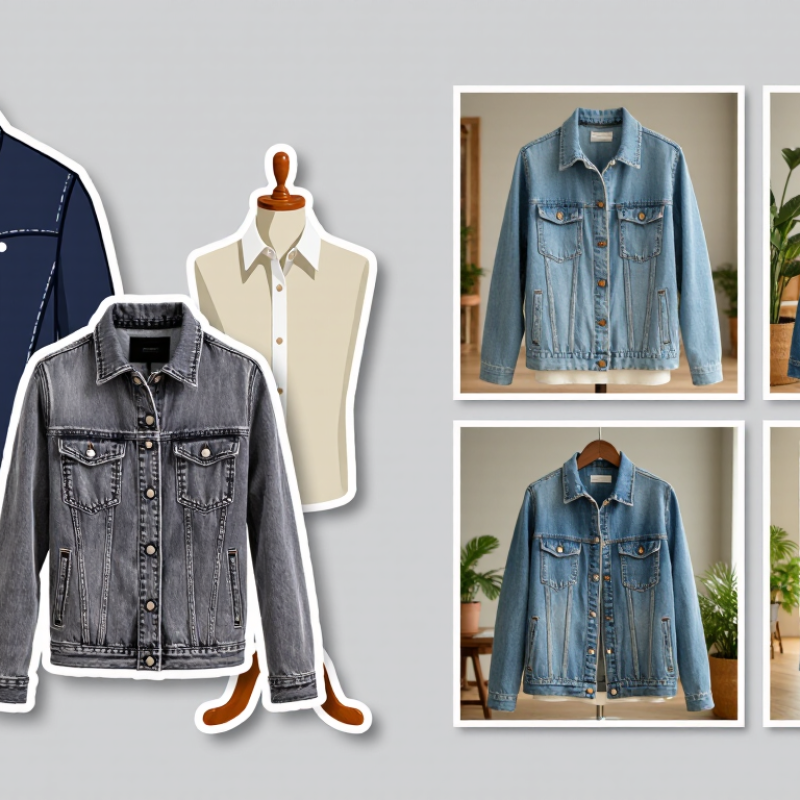
The 2026 denim jacket market is becoming more practical and region-specific. Global buyers are seeking versatile jackets that work across seasons, climates, and retail channels. Lightweight denim is gaining attention in warmer markets, while lined and heavier styles remain useful in colder regions. Relaxed fits continue to sell, but cropped and workwear-inspired shapes add variety to buying plans.
Material evaluation remains essential.
Buyers should check fabric weight, colorfastness, shrinkage, seam strength, and hardware performance before placing large orders. Recycled cotton blends and lower-impact washing methods may support sustainability goals, but claims require reliable documentation. A supplier’s sample can look excellent. Bulk production may differ.
That risk deserves attention. Real buying experience shows that fit comments often change after washing and wear testing. Size measurements should be reviewed with actual users from target markets, not only mannequin samples. Buyers also need clear information about production capacity, lead times, packaging, and quality-control procedures. Digital sampling improves speed, yet physical inspection still reveals texture, stiffness, and odor more accurately. Some trend forecasts may overstate demand, so smaller test orders can provide a safer market signal.
In 2026, denim jacket design is moving toward practical comfort with sharper visual structure. Relaxed boxy cuts remain important for global buyers, but excessive volume may reduce retail appeal. A slightly dropped shoulder and a clean waist length often offer better balance. These details suit layered outfits across changing climates.
Washed indigo, soft black, ecru, and dusty blue are gaining attention. Buyers are also requesting uneven fades, subtle whiskering, and visible seam contrast. These effects create character without making the jacket look overprocessed. Lightweight denim works well for warmer markets, while 11 to 13 ounce fabric gives stronger shape in cooler regions. Recycled cotton blends can support material goals, but hand feel and shrinkage still need careful testing. Not every sustainable claim feels practical.
Utility details are becoming more refined. Large patch pockets, adjustable cuffs, metal-free trims, and removable hoods can improve daily use. However, too many features may make production slower and increase quality risks. I would check pocket strength, colorfastness, button security, and measurement accuracy before placing larger orders. Small defects become expensive when multiplied across a shipment. Fit remains difficult. A cropped jacket may perform well online, yet limit movement for some customers. Size grading should reflect local body measurements rather than one universal assumption. Clear fabric specifications, inspection records, and sample approval help buyers make more reliable decisions.
For global denim buyers in 2026, material evidence will matter more than surface appearance.
Textile Exchange’s Materials Market Report 2024 recorded 124 million tonnes of global fiber production in 2023. Recycled fibers represented only about 7.6 percent. The gap remains significant.
Organic cotton, recycled cotton, hemp, and lyocell can reduce dependence on conventional inputs. However, each option needs verification. Recycled cotton may have shorter fibers, causing durability problems in heavy denim. That weakness is often ignored. Buyers should request fiber-content records, recycled claims, and transaction certificates before approving production.
Water and chemical controls also deserve close inspection. The European Environment Agency has identified textile production as a major source of industrial water and chemical pressure in Europe. Responsible factories should monitor dye-house water, wastewater treatment, energy use, and restricted substances. Certifications such as GOTS, GRS, OEKO-TEX, and ISO 14001 can support due diligence, but certificates are not the whole story. Site audits, production records, and corrective-action reports reveal more. A low-water finishing process may still create excessive energy use. That trade-off needs honest review.
For 2026 collections, buyers can prioritize undyed or naturally varied surfaces, lower-impact indigo systems, and durable construction. Longer wear reduces replacement demand. Textile Exchange’s report also shows that polyester still dominates global fiber production, reminding denim teams that “recycled” does not automatically mean circular. A jacket made with responsible fabric can still fail if it lacks repair options, traceable suppliers, or realistic end-of-use planning.
2026 Best Denim Jacket Trends for Global Buyers?
Denim jacket sizing is becoming a market-specific issue, not a simple S-to-XL conversion. True Fit’s 2023 Global Fit Insights Report found that around 60% of shoppers abandon online apparel purchases when fit feels uncertain. That gap matters. Buyers in Seoul may request shorter sleeves, while customers in Northern Europe may need longer body lengths and broader shoulders. A global size chart is tempting, but it is usually wrong.
Fit is local. Export teams should collect chest, shoulder, sleeve, and back-length measurements by target market. Use centimeters first, then provide regional conversions. A relaxed jacket may need 4–8 centimeters of chest ease, depending on layering habits and climate. Slim cuts require tighter tolerance, especially at the armhole. We still see factories grading every size evenly, even when body proportions change unevenly. That needs review.
Customization should cover more than labels. Buyers increasingly request adjustable cuffs, two-way shaping, extended sizes, and separate men’s and women’s blocks. Cotton Incorporated’s 2024 Global Lifestyle Monitor continues to show strong consumer interest in cotton comfort and everyday wearability. Wash development also affects fit; heavy enzyme treatment can reduce measurements after production. Pre-wash testing, three-dimensional fit reviews, and post-wash measurement reports improve reliability. Measure twice. Then test again.
Global buyer planning reference for denim jacket development, grading, and customization
| Market | Key 2026 Trend Direction | Common Size Reference | Preferred Fit | Recommended Body-Length Approach | Customization Priorities | Buyer Development Notes |
|---|---|---|---|---|---|---|
| United States & Canada | Relaxed and oversized silhouettes; utility details; medium-to-heavy authentic denim; washed black and mid-blue. | US/CA numeric sizing, typically 0–20 or XS–3XL; use finished garment measurements alongside labels. | Relaxed shoulder, wider sleeve, comfortable layering ease. | Hip-length to slightly cropped; provide separate petite and tall options where volume supports it. | Extended size grading, sleeve width, large patch pockets, adjustable hems, recycled-content trims. | Do not rely on a single universal conversion chart; validate fit on local base-size wearers. |
| United Kingdom & Ireland | Modern workwear, cropped trucker shapes, ecru denim, visible twill texture, and vintage-inspired washes. | UK numeric sizing, commonly 6–24, or XS–3XL; chest and sleeve measurements should be shown in cm and inches. | Boxy or regular fit with moderate layering ease. | Cropped waist length and classic hip length are both commercially relevant. | Rain-resistant finishes, antique metal hardware, contrast stitching, detachable collars, inclusive grading. | Specify wash consistency and colorfastness because lighter and vintage washes reveal shade variation easily. |
| European Union | Clean minimalism, straight silhouettes, responsible fibers, undyed or low-impact finishes, and refined dark indigo. | EU numeric sizing, often 32–52 for womenswear and 44–60 for menswear; measurements vary by country and category. | Regular, straight, or lightly tailored fit rather than extreme volume. | Classic hip length with balanced front and back hems; avoid excessive drop-tail proportions. | Material traceability, lower-impact washing, nickel-compliant hardware, repairable construction, accurate grading. | Confirm fiber composition, care labeling, chemical compliance, and sustainability documentation before bulk approval. |
| Japan | Shorter proportions, neat workwear, slub textures, selvedge-inspired details, and carefully controlled indigo fades. | Japanese numeric sizing or S–LL/3L; shoulder, sleeve, and body length must be measured separately. | Neat regular fit, compact shoulder, moderate ease, and shorter sleeves. | Slightly shorter body length than broad Western blocks; cropped styles require precise hem placement. | Fine stitch density, clean pocket alignment, compact hardware, textured denim, and precise wash mapping. | Request physical samples because small differences in shoulder width and sleeve pitch can significantly affect perceived fit. |
| South Korea | Fashion-led oversized layers, cropped jackets, washed gray, light blue, and coordinated denim outfits. | Korean numeric sizing or S–XL; provide shoulder width, chest width, sleeve length, and total length. | Oversized upper body with controlled length; dropped shoulders are common. | Cropped or waist-to-high-hip lengths are suitable for fashion collections. | Statement washes, removable badges, contrast panels, wide sleeves, and adjustable waist details. | Use detailed flat measurements and model height references; letter sizing alone is insufficient. |
| Australia & New Zealand | Relaxed utility, trans-seasonal layering, breathable lighter denim, sun-faded washes, and workwear styling. | AU/NZ numeric sizing or XS–3XL; fit should account for layering and regional climate differences. | Relaxed regular fit with practical arm mobility. | Classic hip length, with lightweight cropped options for warmer seasons. | Lighter fabric weights, breathable construction, sun-resistant color, secure pockets, and durable topstitching. | Test shrinkage and colorfastness after repeated washing; climate and strong sunlight can accelerate fading. |
| China | Broad commercial mix: oversized streetwear, clean minimal jackets, cropped womenswear, and coordinated denim sets. | Chinese numeric sizing or S–3XL; always publish garment measurements because label standards differ by seller. | Trend-sensitive oversized and boxy fits, alongside neat regular blocks. | Cropped, waist, and standard hip lengths should be developed as separate blocks. | Fast wash development, embroidery or patch placement, flexible MOQ options, and multiple colorways. | Separate fashion capsules from core programs to control sampling, wash approvals, and inventory risk. |
| Southeast Asia | Lightweight denim, breathable overshirts, cropped cuts, relaxed layering, and pale or mid-blue washes. | Local numeric sizing or XS–2XL; include chest, hem, sleeve, and garment length in cm. | Relaxed but not excessively heavy; roomier armholes support warm-weather comfort. | Cropped and hip-length styles are generally more practical than long, heavy jackets. | Low-to-mid-weight denim, moisture comfort, ventilation details, lighter trims, and easy-care finishes. | Prioritize fabric weight, breathability, and color migration testing for humid conditions. |
Sourcing denim jackets in 2026 requires more than following oversized or vintage-inspired trends. Buyers should define fabric weight, fit, wash effect, and target market before requesting samples. A 12-ounce cotton denim jacket may suit mild climates, while a 14-ounce fabric offers stronger structure but can feel heavy. Recycled fibers can support sustainability goals, yet they may change softness and durability. Request fiber-content records and production samples from the same fabric lot.
Pricing should be compared by specification, not by unit price alone. Calculate fabric consumption, washing costs, trims, packaging, inspection, and shipping separately. A lower quotation may hide weaker hardware or inconsistent sizing. Ask for price breaks at different order quantities. Confirm whether the quote includes sampling, labeling, and carton protection. Small details matter.
Quality evaluation needs hands-on testing. Check shoulder balance, sleeve rotation, pocket alignment, and bartack strength. Measure shrinkage after washing, especially around the body length and cuffs. Rub a dark indigo sample with a white cloth. Color transfer can disappoint customers. Examine seams under bright light. Loose threads are easy to miss. A sample can still deceive. Production control is the harder part. Use a written measurement chart, approved wash standard, and pre-shipment inspection. I have found that one approved sample is not enough; batch consistency deserves separate verification.